
Advanced Technology
When you seek care at our office, you are assured that Dr. Hutchings and staff utilize the latest in technology to enhance the quality and fit for your dental care.
Digital Imaging
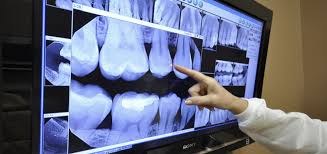
Dr. Hutchings carefully chooses when and where to take x-rays and intraoral images and makes sure he has the highest diagnostic quality. X-rays and images allow us to see everything we cannot see with our own eyes. They enable us to detect cavities in between your teeth, determine bone level, and analyze the health of your bone. We can also examine the roots and nerves of teeth, diagnose lesions such as cysts or tumors, as well as assess damage when trauma occurs.
Dental x-rays are invaluable aids in diagnosing, treating, and maintaining dental health. Exposure is extremely minimal. Dr. Hutchings utilizes Digital Imaging Technologies within the office. With digital imaging, exposure time is about 70 percent less when compared to traditional x-rays. Digital imaging can also help us retrieve valuable diagnostic information. We may be able to see cavities better.
Digital imaging allows us to store patient images, and enables us to quickly and easily transfer them to specialists or insurance companies.
Laser Dentistry
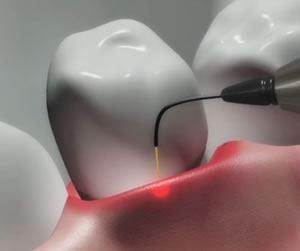 For patients who do not look forward to needles, drilling, or numbness, Laser Dentistry may be the right choice.
Laser dentistry is one of dentistry’s latest advances. The laser delivers energy in the form of light. Depending on the intended result, this energy travels at different wavelengths and is absorbed by a “target.” Laser dentistry can be used in soft tissue related procedures. Oftentimes no local anesthesia is required. Unlike with the dental drill, with laser dentistry there is no heat or vibration, making the procedure quite comfortable for most patients. For soft tissue (surgical) procedures it eliminates the need for suturing and healing is much faster.
Areas of dental care that benefit from laser technology:
- Periodontal, or gum related, care
- Apthous Ulcer treatment (canker sore)
- Frenectomy (tongue-tie release) without anesthesia or sutures
- Treatment for cold sores
- Crown lengthening, gingivectomy and other gum corrections
Dental lasers have been shown to be safe and effective for treating both children and adults.
Intraoral Camera
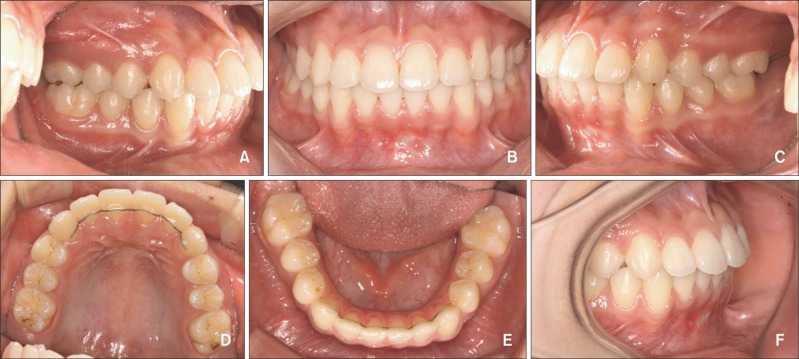
Many patients, especially younger patients, are very familiar with the latest technology and are comfortable with the high tech practice. Computers and TV screens are their primary method of information processing.
Dr. Hutchings utilizes Intraoral Camera technology that helps enhance your understanding of your diagnosis. An Intraoral Camera is a very small camera – in some cases, just a few millimeters long. An Intraoral Camera allows our practice to view clear, precise images of your mouth, teeth and gums, in order for us to accurately make a diagnosis. With clear, defined, enlarged images, you see details that may be missed by standard mirror examinations. This can mean faster diagnosis with less chair-time for you!
Intraoral cameras also enable our practice to save your images in our office computer to provide a permanent record of treatments. These images can be printed for you, other specialists, and your lab or insurance companies.
Electric Hand-Pieces
Many dentists use air-driven “hand-pieces” (the dental term for “drills”). While acceptable for many procedures, these “whiney sounding” air-powered hand pieces all have a degree of non-concentricity; they do not rotate perfectly smoothly.
For the most precise aspects of restorative procedures, we use electric hand-pieces. This results in extraordinarily precise interfaces between your tooth and your new restoration (dental crown, tooth veneer, or tooth filling). This will bring more comfort to you as well. With a more precise tool, there is less vibration and less noise.